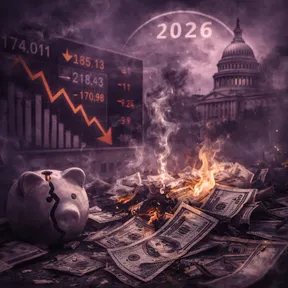
Will the United States experience a financial crisis in 2026 worse than 2008?
Economist Peter Schiff warns that surging precious metals are signaling an approaching U.S. financial crisis, potentially in 2026 and more severe than 2008. Gold, silver, and platinum have all hit record levels, which Schiff interprets as evidence of accelerating inflation, eroding trust in the U.S. dollar, and mounting sovereign-debt risks. He points to central banks increasing gold reserves while reducing dollar and U.S. Treasury exposure, alongside dedollarization efforts by BRICS countries. Critics note that while commodity rallies can flag stress, translating market signals into a crisis requires concrete triggers—credit dislocations, banking failures, or a sharp fiscal shock. The uncertainty is whether elevated metals reflect precautionary hedging amid geopolitical risk, or the early phase of a systemic unwind.
Conditions
Resolves “Yes” if by December 31, 2026, the U.S. experiences a nationally recognized financial crisis marked by at least one of the following: major bank failures or bailouts, emergency federal financial interventions, a severe credit freeze, or an officially declared recession accompanied by systemic market disruption, as confirmed by U.S. authorities or major international media. Otherwise — “No.”


Comments