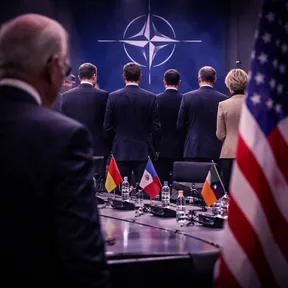
Is Europe turning its back on the U.S. inside NATO?
Recent tensions — especially over the conflict involving Iran and disagreements around the Strait of Hormuz — appear to be pushing European NATO members closer together. Reports of coordinated meetings and unified resistance to U.S. demands suggest a shift toward stronger intra-European alignment. However, structural limits remain. NATO is still heavily dependent on U.S. military capabilities, and legal, political, and logistical barriers make any rapid European strategic autonomy difficult. The most realistic scenario is increased political coordination and joint positioning among European members, without a full structural shift away from U.S. leadership in the near term.
Conditions
Resolves “Yes” if by October 31, 2026, European NATO members: publicly announce or implement a coordinated defense or security initiative (e.g., joint military framework, funding mechanism, or operational plan) that is explicitly independent of or not led by the United States within NATO Otherwise — “No.”


Comments